Healthcare concept · AI assistance
MediSync+
Making the days after discharge easier to organize.
A virtual AI nurse concept that brings daily care tasks into one patient-facing experience.
Hackathon prototype
UMHackathon 2026 Finalist
Care doesn’t stop
at the hospital door.
A proposed connection back to care.
01The context
The problem
worth solving.
After leaving hospital, patients may need to manage several instructions, medications and follow-up appointments. The concept explores how one organized interface could support that transition and maintain a connection to professional care.
Who it’s for
People managing care after discharge, with healthcare professionals as secondary users of the proposed workflow.
The solution
MediSync+ combines medication organization, a daily checklist, follow-up visits, symptom logging and conversational assistance. Its proposed AI workflow uses separate agents for care tasks and includes clarification and human escalation when information is uncertain.
02What we built
The details that
make it useful.
- A daily point of reference
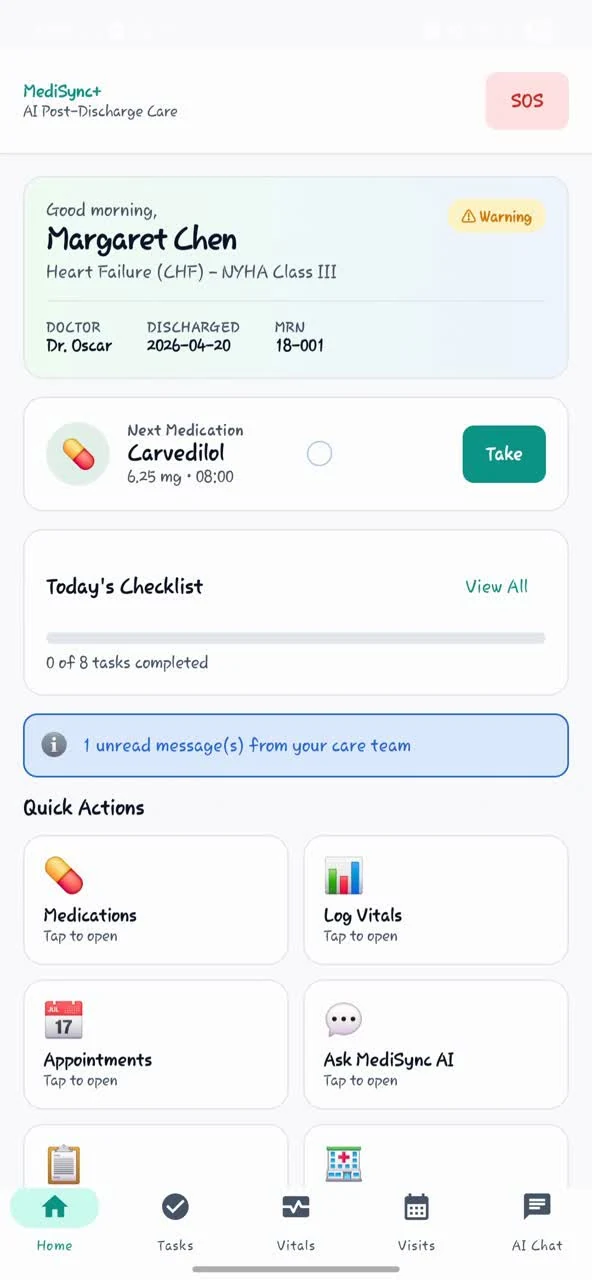
- The home interface brings pending medication and care tasks into a single patient-facing view.
- Care tasks made visible
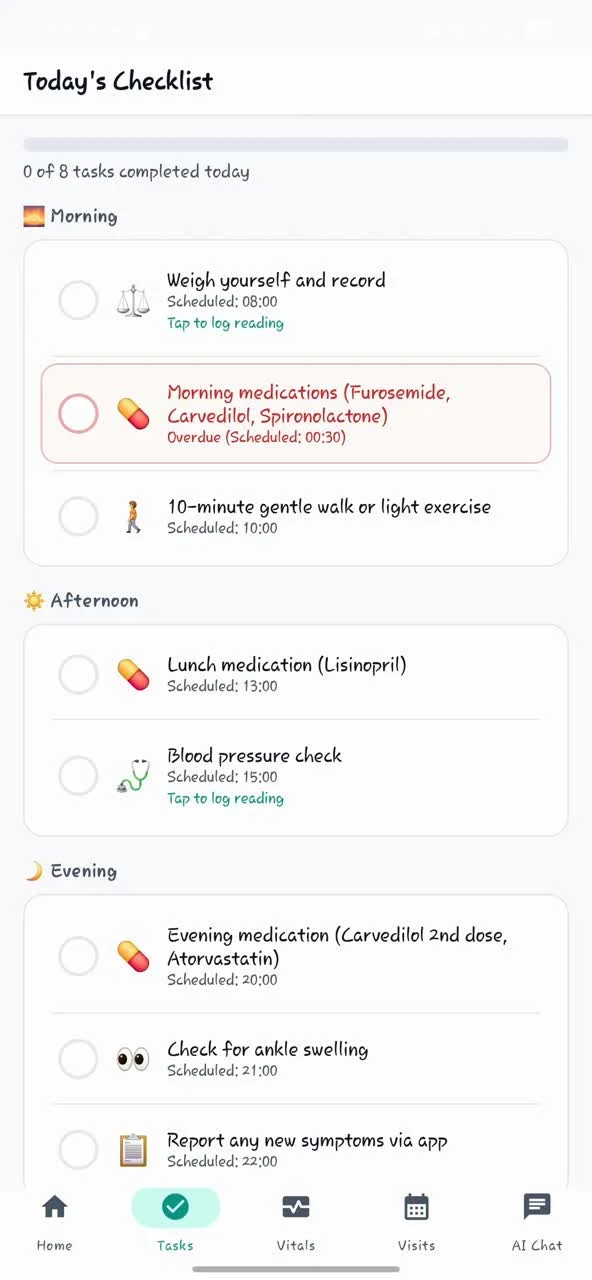
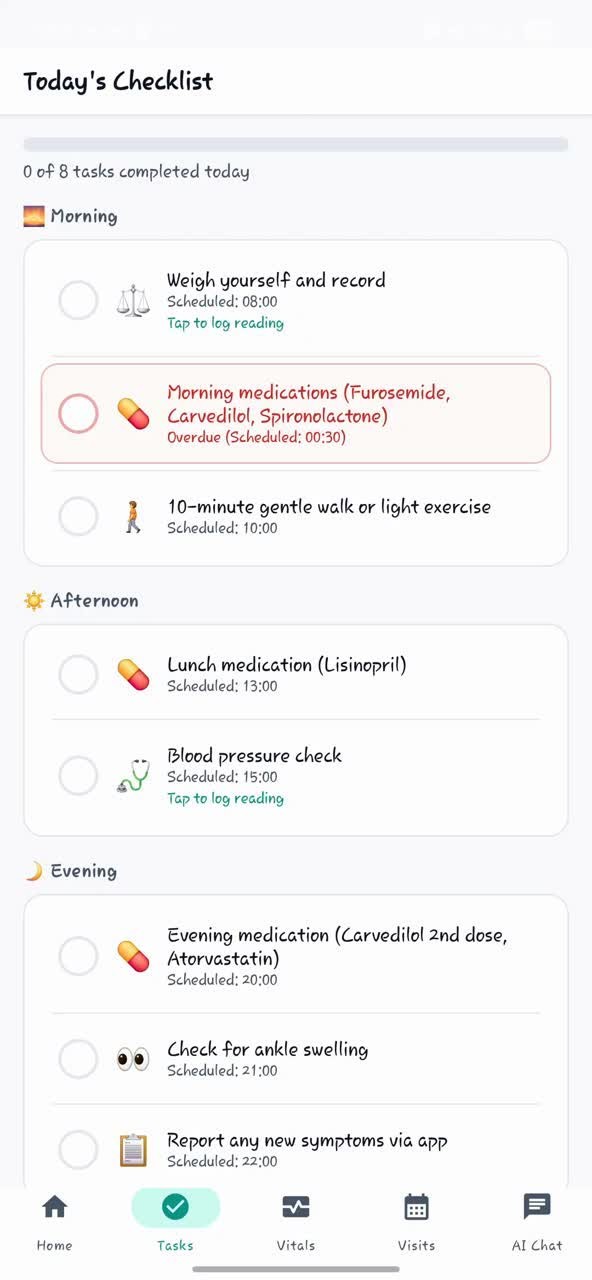
- A checklist groups daily activities and reminders so the intended next steps are easier to find.
- Follow-up organization
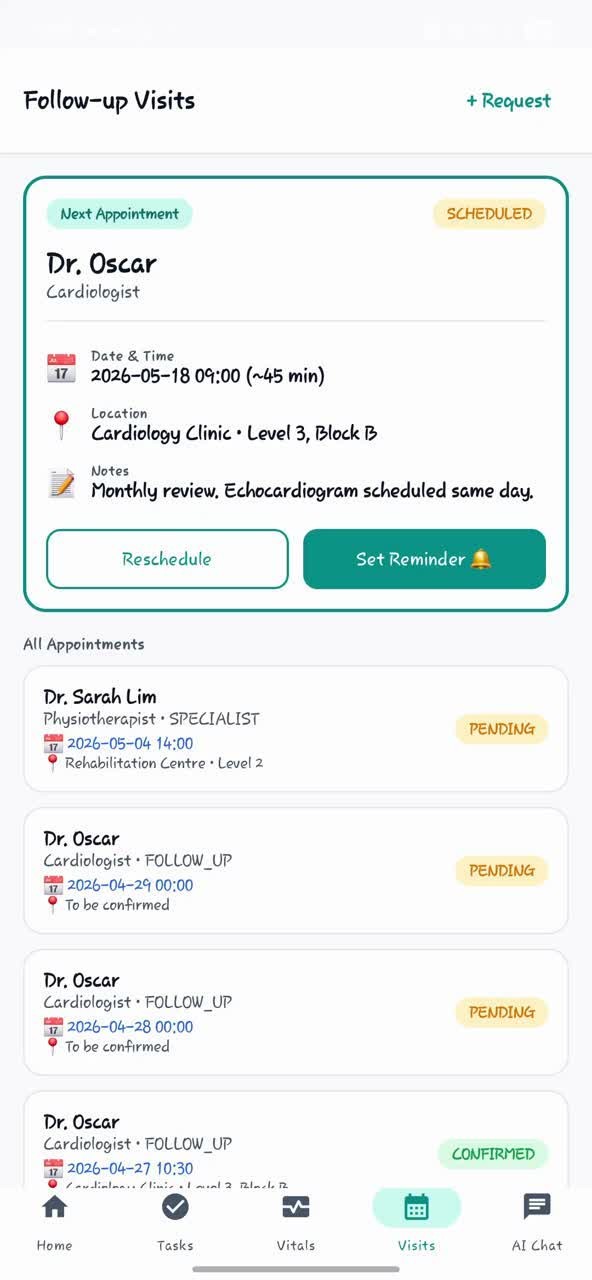
- The prototype includes visit details and appointment-related reminders.
- A proposed connection to care
- The concept includes symptom tracking, risk alerts and escalation to a healthcare professional when information needs human review.
03How it works
A clear path
through the system.
Organize instructions
Bring discharge, prescription and follow-up information into the proposed workflow.
Support daily care
Present medication, checklist and visit information to the patient.
Capture concerns
Let the patient log symptoms or ask for clarification.
Escalate uncertainty
Propose human review for ambiguous or conflicting information.
04A closer look
Inside MediSync+.
05Design & engineering
Thoughtful choices.
Practical value.
A patient-first information hierarchy
The phone interfaces prioritize today’s tasks and next appointments. The purpose is to make care information easier to organize, not to replace professional judgement.
Separate responsibilities behind one interface
The deck describes agents for medication, symptoms, follow-ups, checklists and risk trajectories, coordinated by an orchestrator.
Human review belongs in the workflow
The concept calls for clarification when patient statements conflict with records, and escalation when a description needs professional interpretation.
06Where it stands
Recognized as a finalist.
UMHackathon 2026 Finalist. The project demonstrates a patient-facing care-organization concept and a proposed AI assistance workflow.
A hackathon prototype, not a clinically certified service. The supplied materials do not establish hospital deployment, medical accuracy or real patient outcomes. It is not a substitute for professional medical care.